(617)-479-3818
(617)-479-3818
(617)-479-3818
(617)-479-3818
(617)-479-3818
(617)-479-3818
|
 |
|
|
Ethnography is a subset of social research techniques derived within anthropology. It has primarily been the domain of academicians and involves comprehensive and often long term data collection from within the subjects' natural environment.
In recent years, marketing research has placed growing importance on ethnography and ethnographic techniques. It is not surprising. Ethnography is a powerful set of techniques that allows companies to obtain a snapshot of people's lives, their experiences, their relationships, the processes they use, their tools and materials, and their triumphs and their disasters. Ethnography also captures the subject's inner thoughts and feelings, their emotions; their values and the rules that guide them. Central to ethnography is open-mindedness When an innovation team is ready to learn new things they might not have thought about before, ethnography is a good tool. Rather than relying on existing mental models, ethnographers use their interactions with subjects to discover new views and ways of thinking. This is about theory building rather than hypothesis testing. Creating new views provide the foundation for higher levels of innovation. However, creating new views requires adopting an open-minded approach. What Ethnographic Techniques can be Used? Essentially, ethnography is a set of qualitative, open-ended approaches that provide an in-depth study of subjects (consumers or customers) in their natural environment within context of a specific process, situation, occasion, product or service. It’s more than just another qualitative study. We typically use a combination of techniques and triangulate to truly describe "What's going on in the subjects world." This provides a comprehensive understanding regarding the topic of interest. Some of techniques include:
What Can I Learn Using Ethnography?
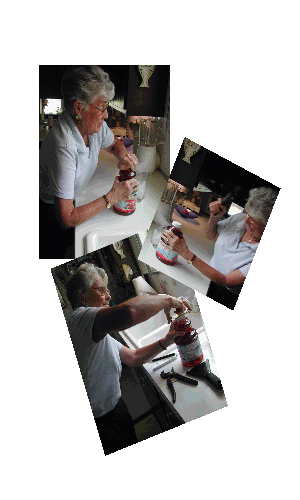
Ethnography allows us not only to to hear what people say they do, but to see their real behaviors, and then probe deeply to understand what drives their behaviors. All within context of the specific products, services, or situations that are central to the ethnographic study. "What people do is often very different from what they say they do." Conventional qualitative research provides only a partial picture. Innovare offers a more holistic ethnographic approach. Consider the following simple example of what you hear in a focus group with consumers compared to what you see in the field.
The ethnographic approach provided substantially greater information an potential insights. It is more complete and contextually based. Ease and safety rise to the surface as important factors to consider and a focus for innovation.
|
||||||
|
|
||||||||||
|
|
||||||||||
|
The ethnographer uses many techniques to gather the information. A key for any study is the in-depth interview. These typically take an hour or two often before and/or after various assignments or field activities. We use a highly open-ended interview approach where the subjects tell of their experiences and and tell us stories.
Story Telling Story telling is a powerful communication technique. It is our natural way we interact and provide information to one another. It's also great tool for ethnography and for innovation. Telling stories came be a very comforting for the subject and build rapport. The story telling aspect of ethnography helps bring the data to life. It helps the subject reveal what's going on in their lives. Stories also helps create a deep understanding about the topic of interest throughout the innovation team and their organization. Having a deeper understanding enables innovators to imagine better solutions in products and services as well as how to make the emotional connections that drives business success. Listening and Probing People who are new to conducting in-depth interviews often just talk too much. The art of the interview calls for good listening. The skilled interviewer first introduces a topic and lets the subject talk. They listen while the subject takes the discussion to where they feel is important. It's not a random walk and the interviewer provides guidance on the topics and probes when greater depth is needed to get at “what is going on here.” For example, when participants use expressions from the lexicon of their experience, such as “good days” and “bad days,” the interviewer asks for more detail. Perhaps a simple probing question. Tell me what a “good” day is like for you. This leaves the response open to the experiences and categories of the participant inviting the participant to frame and explore his or her own views of a good day.
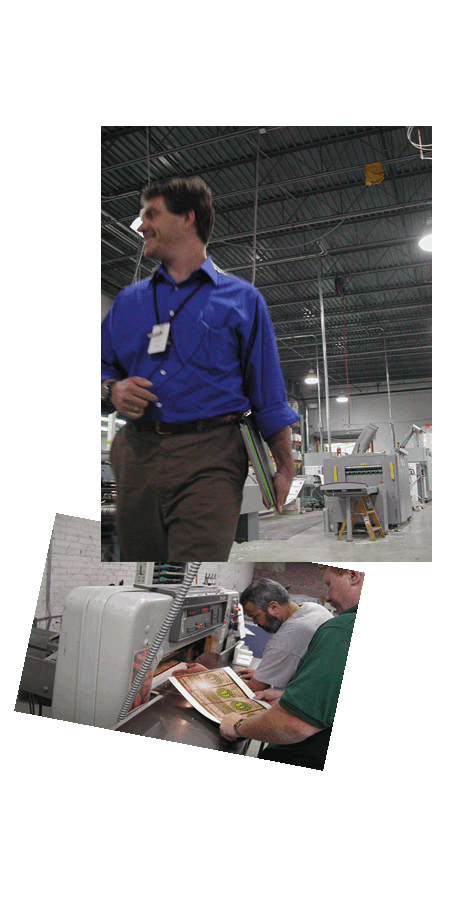
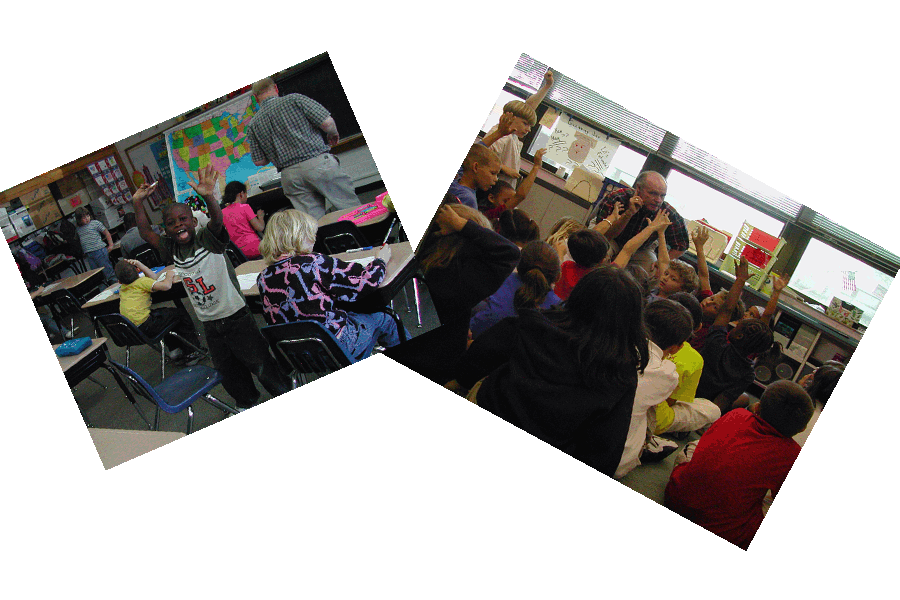
This is literally being the fly on the wall. For example, sitting in public elementary school classrooms in various regions and communities. Watching changes in the level of student engagement associated with different instructional approaches and materials. Or perhaps, observing a variety of metal workers and welders operating in differing application environments to uncover opportunities to enhance personal safety and work integrity. The key is to be open for the unexpected event, the unconscious behaviors that take place, the unintended consequences, and the natural work-arounds that subjects create to overcome problems in their environment.
Photo Essays, Video, and Subject Diaries: Photography allows the researcher to provide visual examples that reinforce the subject’s story. This brings a high level of connectedness between the client team and the research findings. If a picture is worth a thousand words, consider the impact of bringing a video record of “a day in the subject’s life” into the innovation team, to senior management, or throughout your marketing and sales teams. It strengthens organizational understanding about the consumer's or your customer's experiences, perceptions, values and needs. Video ethnography adds another dimension to the research. It is a highly efficient discovery and communication device and a key tool for the ethnographic researcher. What could be more direct than having the subject capture their story? At times we have subjects create their own record such as through pre-interview assignments. Before the interview we provide the subject with a camera or a diary. They are instructed to capture what they find important regarding the topics of interest. They keep an on-going log of their experiences and impressions for a period of time. This technique provides a rich set of data useful to stimulate thoughtful discussion during subsequent depth interviews.
|
||||||||||
|
©2001- 2011 Innovare, Inc. All rights reserved.
Innovare and Vocal Insights are registered trademarks of Innovare, Inc.
|